
Register Contact For patients
Coloplast Professional
  • Stoma

    E-learning

    E-learning

    Webinars on-demand

    Webinars on-demand

    Videos

    Prevention Guide

    Mentorship Programme

    Mentorship Programme

    Knowledge hub

    Apollo Paediatric ostomy Foundations in Motivational Interviewing

    Short reads

    Short reads

    Articles and Publications

    Articles and Publications

    Validated Tools

    Validated Tools

    Event calendar

    Event calendar

    Webinars

    Webinars

    Face to Face Events

    Face to Face Events

    Podcasts

    Podcasts

    All resources

    All resources

    Fit tool

    Fit tool

    Patient resources

    Educational Videos Instructional Videos

    Coloplast Charter

    Coloplast Charter

    All Ostomy Products

    All Ostomy Products

    SenSura Mio

    SenSura® Mio Concave SenSura® Mio in Black

    Supporting Products

    Heylo Brava Protective Seal
  • Bladder

    E-learning

    E-learning

    Webinars on-demand

    Webinars on-demand

    Podcasts

    Podcasts

    UTI Risk Factors Model

    UTI Risk Factors Model

    Short reads

    Short reads

    Articles and Publications

    Articles and Publications

    Validated Tools

    Validated Tools

    Neurogenic

    Neurogenic

    Event calendar

    Event calendar

    Webinars

    Webinars

    Face to Face Events

    Face to Face Events

    Patient assessment

    Patient assessment

    Patient resources

    Educational videos Instructional Videos

    Coloplast Charter

    Register an IC Patient Urine Drainage Patient Registration Coloplast Charter

    All Bladder Products

    All Bladder Products

    Luja

    Luja Female Luja Male
  • Bowel

    E-learning

    E-learning

    Webinars on-demand

    Webinars on-demand

    Podcasts

    Podcasts

    Knowledge hub

    LARS MENTOR Tool Foundations in Motivational Interviewing

    Articles and Publications

    Articles and Publications

    Validated Tools

    Validated Tools

    Tai Treatment Guide

    Tai Treatment Guide

    Event calendar

    Event calendar

    Webinars

    Webinars

    Face to Face Events

    Face to Face Events

    Patient services

    Patient services

    Peristeen® - Registering patients to Charter or Referring to the

    Peristeen® - Registering patients to Charter or Referring to the Coloplast Nursing Service

    All Bowel Products

    All Bowel Products

    Peristeen

    Peristeen® Light Peristeen Light Portfolio Peristeen Plus Peristeen Anal Plug
  • Wound

    E-learning

    E-learning

    Knowledge

    Everything you need to know about wound care Wound preparation Wound assessment Wound healing Exudate management Wound types Infection and biofilm

    Podcasts

    Podcasts

    Patient cases

    Patient cases

    Clinical videos

    Clinical videos

    Scientific publications

    Scientific publications

    Event calendar

    Event calendar

    Webinars

    Webinars

    Tools for professionals

    Tools for professionals

    Tools for patients

    Tools for patients

    All wound dressings

    All wound dressings

    Non-infected wounds

    Non-infected wounds

    Infected wounds

    Infected wounds

    Painful wounds

    Painful wounds

    Types of dressing

    Silicone foam dresssings Foam dressings Silver dressings Hydrocolloid dressings Contact layer dressings Gelling fiber dressings
  • Interventional Urology

    Erectile restoration

    Clinical Evidence Clinical Learning E-learning

    Male continence

    Clinical Evidence Clinical Learning E-learning

    Female Continence

    Clinical Evidence Clinical Learning E-learning

    Pelvic Floor Reconstruction

    Clinical Evidence Clinical Learning E-learning

    Stone Management

    Clinical Evidence Clinical Learning E-learning

    Soft Tissue Management

    Clinical Evidence Clinical Learning E-learning

    BPH

    Clinical Evidence Clinical Learning E-learning

    Upcoming Events
Log in
Coloplast Professional
New Mobile navigation Shopping basket Shopping basket Shopping basket Print Icon Icon / delete Temp Info

This site is intended for Healthcare Professionals only. The site content is intended for informational- and educational purposes and may not be appropriate for all jurisdictions. Coloplast does not provide medical advice. Responsibility for patient care resides with the health care professional. For detailed device information on products presented, including instructions for use, contraindications, effects, precautions and warnings, please consult the product’s Instructions for Use (IFU) prior to use.

Yes, I am a health care professional No, I am not a health care professional
<h2> How often should you assess a wound?</h2>

How often should you assess a wound?

Recommendations are, that wounds are assessed at least once per week.
<h2>Assess, mind the gap</h2>

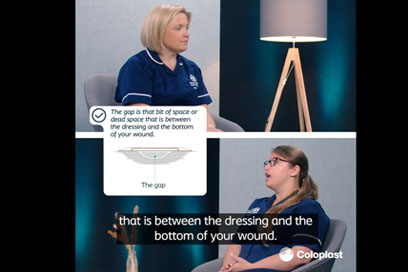
Assess, mind the gap

The gap is that bit of space or dead space that is between the dressing and the bottom of your wound.
<h2>Importance of holistic wound assessment</h2>

Importance of holistic wound assessment

First and foremost, do a holistic assessment of your whole patient.
<h2>How to assess wound exudate</h2>

How to assess wound exudate

Exudate is the fluid that leaks from the wound. It is a natural and essential part of the wound healing process.
<h2>What is a wound?</h2>

What is a wound?

A wound is a disrption in the integrity of the skin, this could be an injury to the skin that can lead to a problem with the underlying tissue
<h2>What are the wound healing phases?</h2>

What are the wound healing phases?

When someone gets a wound, we know that the body starts a complex healing process - inflammation, proliferation and remodelling.
<h2>Exudate can cause challenges</h2>

Exudate can cause challenges

If we don't manage exudate correctly, we can get pools of exudate in our patients wound, potentially increasing the risk of infection in the wound.
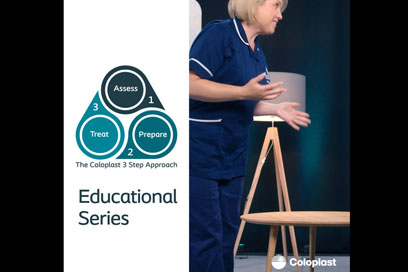
<h2>Defining wound management</h2>

Defining wound management

A holistic wound assessment is essential when it comes to planning how you're going to treat your patients.
<h2>Learn how to effectively prepare wounds</h2>

Learn how to effectively prepare wounds

Did you know that what is removed from the wound is often more important than what is applied to the wound in terms of dressing selection?

<h2>Importance of Wound Preparation</h2>

Importance of Wound Preparation

Did you know, what is removed from the wound is often more important than what is applied to the wound in terms of dressing selection.
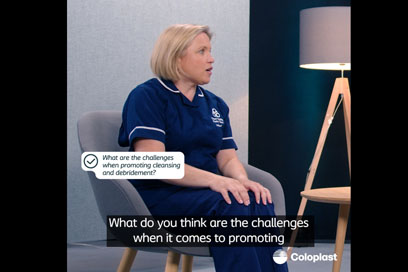
<h2>Wound debridement</h2>

Wound debridement

What are the challenges when promoting cleansing and debridement?

<h2>Wound Preparation Best Practice</h2>

Wound Preparation Best Practice

Wound preparation is clinically proven to speed up wound healing and should be a routine and regular practice at every dressing change.

<h2>To debride or not to debride</h2>

To debride or not to debride

As a general rule: If the wound is not covered in granulation tissue, debridement can be performed to help the wound heal.
<h2>What is wound preparation?</h2>

What is wound preparation?

A holistic approach to encompassing both the assessment and physical cleansing and debridement of a wound bed, edge and periwound skin.
<h2>Factors affecting wound healing</h2>

Factors affecting wound healing

There are many factors that can impact wound healing, these range from age through to different comorbidities such as diabetes.

<h2>How to choose an optimal wound dressing</h2>

How to choose an optimal wound dressing

Learn key tips to consider when choosing a dressing. How you select the right silicone foam dressing. How you select the right gelling fiber dressing
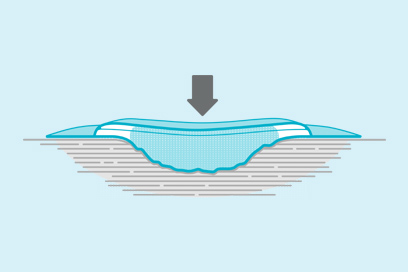
<h2>How to manage the gap & exudate</h2>

How to manage the gap & exudate

Learn how to prioritise the management of the gap and wound exudate, as well as how a wound bed conforming dressing can help you effectively treat patients.
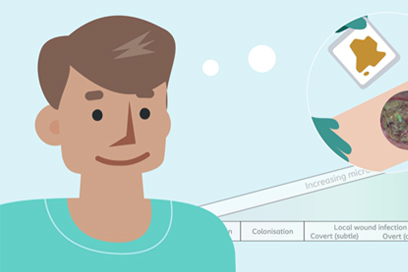
<h2>How to treat infected wounds</h2>

How to treat infected wounds

Did you know? All open wounds are contaminated or colonised with microorganisms; however, not all contaminated wounds become infected.
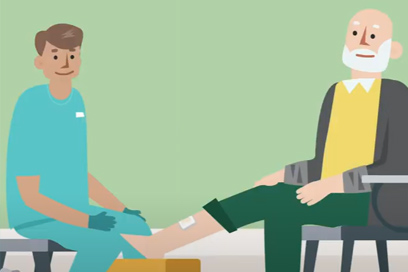
<h2>How to prevent Infection & Biofilm</h2>

How to prevent Infection & Biofilm

What are the best practices for preventing infection and biofilm development?
<h2>Treat, venous and arterial leg ulcers</h2>

Treat, venous and arterial leg ulcers

How do we make the dagnosis between a venous leg ulcer and an arterial ulcer?
<h2>Treat, different types of open wounds</h2>

Treat, different types of open wounds

How would we treat open wounds such as lacerations or puncture wounds?
<h2>Treat, different types of closed wounds</h2>

Treat, different types of closed wounds

How do we treat closed wounds such as hematomas or blunt force traumas?
<h2>Treat, different types of chronic wounds</h2>

Treat, different types of chronic wounds

Chronic wounds can be caused through many different factors, so its important that each person has an individualised plan of care.
<h2>Treat, different types of acute wounds </h2>

Treat, different types of acute wounds

Acute wounds include trauma wounds, skin tears, burns and surgical wounds.

Explore topics

Wound preparation Moist wound healing
  • The information, views and opinions expressed at this site and in the materials presented are solely those of the individuals involved and do not necessarily represent those of Coloplast A/S or its affiliates (“Coloplast”). Coloplast is not responsible and does not verify the accuracy of any of the information or material presented at the site. The information presented may not be appropriate for all jurisdictions.
    Read the full disclaimer
  • 0800 220 622
  • CProfessionalUK@coloplast.com
  • mktcoloplastiu@coloplast.com - IU contact
  • Coloplast Ltd Nene Hall, Peterborough Business Park PE2 6FXPeterborough United Kingdom
    • Cookie policy
    • Legal Aspects
    • Privacy Notice
    • Coloplast products - instructions for use
    • Modern Slavery Act
    • EU Declarations of conformity
    • Accessibility